Poetry Anthology "Ballads of Too Early Destiny"
Written by KRT. Suryanto Sastroatmodjo
Translated by Agus B. Harianto
The craziness leads to one hole,
doesn’t seen but felt,
digs the own grave in the entrenchment of ground,
uncovers the great grand mother; all kind of bones are breaking uncommonly,
spread around, be collapsed suppressed by the war. Where doesn’t change,
become the digger for the all brothers. (The Crazy Man Accost You: XXXVII).
Tampilkan postingan dengan label Agus B. Harianto. Tampilkan semua postingan
Tampilkan postingan dengan label Agus B. Harianto. Tampilkan semua postingan
Selasa, 04 Mei 2021

Jumat, 01 Januari 2021

Rabu, 26 Oktober 2011
Listening to Richard Strauss to Read Nietzsche: Meet Richard Wagner and Arthur Schopenhauer
Written by Nurel Javissyarqi
Translated by Agus B. Harianto
http://pustakapujangga.com/category/richard-strauss/
Richard Strauss, the son of Franz Strauss. Born at June 11, 1864 in Munich, and he died at September 8, 1949, and he is a German composer. Since he was young he had comprehensive music education from his father.
Translated by Agus B. Harianto
http://pustakapujangga.com/category/richard-strauss/
Richard Strauss, the son of Franz Strauss. Born at June 11, 1864 in Munich, and he died at September 8, 1949, and he is a German composer. Since he was young he had comprehensive music education from his father.
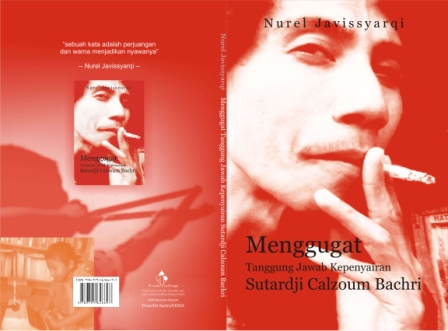
Sue Responsibility of Authorship of Sutardji Calzoum Bachri
Epilogue
Written by Nurel Javissyarqi
Translated by Agus B. Harianto
Two essays of Tardji as an attachment is sufficiently to identify his anatomy in the field of literature that deals with “the mantra” from its roots, which is the tradition.
Written by Nurel Javissyarqi
Translated by Agus B. Harianto
Two essays of Tardji as an attachment is sufficiently to identify his anatomy in the field of literature that deals with “the mantra” from its roots, which is the tradition.
Sue Responsibility of Authorship of Sutardji Calzoum Bachri (VII)
Written by Nurel Javissyarqi
Translated by Agus B. Harianto
VII
This section I followed an odd number VII, the final space of my disagreement with Tardji. Which was begun by his delirium that the Lord imagined, dreamed, had inspired me to visit:
Translated by Agus B. Harianto
VII
This section I followed an odd number VII, the final space of my disagreement with Tardji. Which was begun by his delirium that the Lord imagined, dreamed, had inspired me to visit:
Johannes Brahms (1833-1897)
Translated by Agus B. Harianto
http://pustakapujangga.com/category/johannes-brahms/
Johannes Brahms (May 7, 1833 – April 3, 1897) is a German composer and pianist, one of the main musicians of Romantic period. He was born in Hamburg, German, but he has a lot of work and he died at Vienna, Austria. At his lifetime he was very popular also influential in the music world.
Sabtu, 08 Oktober 2011
Sue Responsibility of Authorship of Sutardji Calzoum Bachri (VI)
Written by Nurel Javissyarqi
Translated by Agus B. Harianto
http://pustakapujangga.com/2011/10/sue-responsibility-of-authorship-of-sutardji-calzoum-bachri-vi/
VI
In the book Raja Mantra Presiden Penyair, the poet, Taufik Ikram Jamil, wrote an essay entitle Bersama Sutardji Calzoum Bachri which has 16 pages, from page 64 to 79, tells of his familiarity with the figure which is known as mantra maker. Ikram told the story of Tardji since he was a kid to the creative process on the land of Pasundan, with warm hug of longing, it seems that Ikram knows exactly tread step and sniffed the scent, sign and shape of any cloud shades.
Translated by Agus B. Harianto
http://pustakapujangga.com/2011/10/sue-responsibility-of-authorship-of-sutardji-calzoum-bachri-vi/
VI
In the book Raja Mantra Presiden Penyair, the poet, Taufik Ikram Jamil, wrote an essay entitle Bersama Sutardji Calzoum Bachri which has 16 pages, from page 64 to 79, tells of his familiarity with the figure which is known as mantra maker. Ikram told the story of Tardji since he was a kid to the creative process on the land of Pasundan, with warm hug of longing, it seems that Ikram knows exactly tread step and sniffed the scent, sign and shape of any cloud shades.
Nurel Javissyarqi Sued Sutardji *)
Written by Chamim Kohari **)
Translated by Agus B. Harianto
http://pustakapujangga.com/2011/10/nurel-javissyarqi-sued-sutardji/
”Penyair-penyair itu diikuti oleh orang-orang yang dungu.
Tidakkah kau lihat mereka menenggelamkan diri dalam sembarang lembah hayalan dan kata,
dan mereka suka mengujarkan apa yang tak mereka kerjakan kecuali mereka yang beriman,
beramal baik, banyak mengingat dan menyebut Allah dan melakukan pembelaan ketika dizalimi”.
(Terjemahan QS. Asysyu’araa: 224-227)
Translated by Agus B. Harianto
http://pustakapujangga.com/2011/10/nurel-javissyarqi-sued-sutardji/
”Penyair-penyair itu diikuti oleh orang-orang yang dungu.
Tidakkah kau lihat mereka menenggelamkan diri dalam sembarang lembah hayalan dan kata,
dan mereka suka mengujarkan apa yang tak mereka kerjakan kecuali mereka yang beriman,
beramal baik, banyak mengingat dan menyebut Allah dan melakukan pembelaan ketika dizalimi”.
(Terjemahan QS. Asysyu’araa: 224-227)
Sabtu, 01 Oktober 2011
The Truth of Language, Mantra, and Responsibility
By Mahmud Ali Jauhari
Translated by Agus B. Harianto
What is in your mind when you read the title above? Is it pattern of language? Shaman who is reciting a mantra? A man who was fulfilling his responsibilities? Or, what?
That day, in a study room, I listened to a short question, “What is language?” Perhaps you’ve heard it either. Or, maybe not. Regarding to the question, many people answer it with a simple sentence, “Language is a communication tool.” The question now, is it true that language is a communication tool?
Jumat, 23 September 2011
Sue Responsibility of Authorship of Sutardji Calzoum Bachri (V)
Written by Nurel Javissyarqi
Translated by Agus B. Harianto
V
There are several Java’s mantra adopted from the doctrine values of Islam, if one of which is far from it should be, it will contaminate spiritual of its depths, such as the spell kulhu sunsang, taken from surah Al-Ikhlas, but distorted till turned a summersault aimlessly.
The mantras which have low-power spiritual and its aura seen red, are easy to learn because it serves to jinn or be united in one with jinn; the patterns of deviation from the true teaching that is deliberately dismantled for the sake of particular fame. It is usually worn by shamans who are not responsible.
Translated by Agus B. Harianto
V
There are several Java’s mantra adopted from the doctrine values of Islam, if one of which is far from it should be, it will contaminate spiritual of its depths, such as the spell kulhu sunsang, taken from surah Al-Ikhlas, but distorted till turned a summersault aimlessly.
The mantras which have low-power spiritual and its aura seen red, are easy to learn because it serves to jinn or be united in one with jinn; the patterns of deviation from the true teaching that is deliberately dismantled for the sake of particular fame. It is usually worn by shamans who are not responsible.
Rabu, 21 September 2011
Reviewing the Authorship of Sutardji Calzoum Bachri (SCB) from Nurel’s Book: “MENGGUGAT TANGGUNGJAWAB KEPENYAIRAN”
(Sue Responsibility of Authorship of Sutardji Calzoum Bachri)*
Written by Aguk Irawan MN**
Translated by Agus B. Harianto
Penyair-penyair itu diikuti orang-orang yang sesat. Tidakkah kau lihat mereka menenggelamkan diri dalam sembarang lembah khayalan dan kata. Dan mereka sering mengujarkan apa yang tak mereka kerjakan. Kecuali mereka yang beriman, beramal baik, banyak mengingat dan menyebut Allah dan melakukan pembelaan ketika didzalimi. (QS As-Syu’ara, 224-227)
Written by Aguk Irawan MN**
Translated by Agus B. Harianto
Penyair-penyair itu diikuti orang-orang yang sesat. Tidakkah kau lihat mereka menenggelamkan diri dalam sembarang lembah khayalan dan kata. Dan mereka sering mengujarkan apa yang tak mereka kerjakan. Kecuali mereka yang beriman, beramal baik, banyak mengingat dan menyebut Allah dan melakukan pembelaan ketika didzalimi. (QS As-Syu’ara, 224-227)
Jumat, 16 September 2011
Sue Responsibility of Authorship of Sutardji Calzoum Bachri (IV)
Written by Nurel Javissyarqi
Translated by Agus B. Harianto
“Buku ini ditulis (keterangan sebelumnya; ada membicarakan sifat-sifat manusia Indonesia, dalam cara seperti dikemukakan oleh Saudara Mochtar Lubis. Dicetak tahun 1920, Haarlem, pengarangnya Prof. J.C. van Eerde, guru besar Universitas Amsterdam dan Direktur dari Koloniaal Institute te Amsterdam. Judulnya: Inleiding tot de Volkenkude van Nederlandsch Indie) dalam tahun 1920, dan dalam tahun-tahun 20-an itu timbul Renaissance Indonesia dengan gerakan Pemuda Indonesia, dan lahirnya Sumpah Pemuda, dan perangsang lagu kebangsaan Indonesia Raya.
Translated by Agus B. Harianto
IV
From quotation of Dr. Abu Hanifah’s writing, Menyambut Ceramah Mochtar Lubis, Renungan Tentang “Manusia Indonesia Masa Kini” at part Lahirlah Sumpah Pemuda:“Buku ini ditulis (keterangan sebelumnya; ada membicarakan sifat-sifat manusia Indonesia, dalam cara seperti dikemukakan oleh Saudara Mochtar Lubis. Dicetak tahun 1920, Haarlem, pengarangnya Prof. J.C. van Eerde, guru besar Universitas Amsterdam dan Direktur dari Koloniaal Institute te Amsterdam. Judulnya: Inleiding tot de Volkenkude van Nederlandsch Indie) dalam tahun 1920, dan dalam tahun-tahun 20-an itu timbul Renaissance Indonesia dengan gerakan Pemuda Indonesia, dan lahirnya Sumpah Pemuda, dan perangsang lagu kebangsaan Indonesia Raya.
Minggu, 11 September 2011
Sue Responsibility of Authorship of Sutardji Calzoum Bachri (III)
Written by Nurel Javissyarqi
Translated by Agus B. Harianto
III
The name of Sutardji Calzoum Bachri is familiar in Indonesian literature for his Poetry Credo. Below I quote some part of it:
“Kata-kata harus bebas dari penjajahan pengertian, dari beban idea. Kata-kata harus bebas menentukan dirinya sendiri.
“The words must be free from colonialism of understanding, from the burden of ideas. The words should be free to decide themselves.”
Translated by Agus B. Harianto
III
The name of Sutardji Calzoum Bachri is familiar in Indonesian literature for his Poetry Credo. Below I quote some part of it:
“Kata-kata harus bebas dari penjajahan pengertian, dari beban idea. Kata-kata harus bebas menentukan dirinya sendiri.
“The words must be free from colonialism of understanding, from the burden of ideas. The words should be free to decide themselves.”
Minggu, 28 Agustus 2011
Sue Responsibility of Authorship of Sutardji Calzoum Bachri (II)
Written by Nurel Javissyarqi
Translated by Agus B. Harianto
Translated by Agus B. Harianto
II
Before I wrote a little further, allowed me to confide about what I felt for this moment. Actually I’m not old enough and science to interpret it. But to answer the Tardji’s essay and the interpreting of the poets I’ve ever read about Asy Syu’ara, I felt like there was a wind blow forced me to write on. Certainly, it will not hamper re-determination in the future, for the sake of sharpening the meaning of life experiences, so sure of, and that’s the prologue of the wanderer.Selasa, 23 Agustus 2011
Sue Responsibility of Authorship of Sutardji Calzoum Bachri (I)
Written by Nurel Javissyarqi
Translated by Agus B. Harianto
I
This paper is a response to the essay of Sutardji Calzoum Bachri entitled Sajak dan Pertanggungjawaban Penyair; his cultural oration at the Pekan Presiden Penyair, published by Republika, September, 9, 2007. In the writing, Tardji stated that text of Sumpah Pemuda is poetry, which is based on the schools of Ibn Arabi, kun fayakun, then he developed the following phrases:
Kamis, 18 Agustus 2011
Sue Responsibility of Authorship of Sutardji Calzoum Bachri
Written by Nurel Javissyarqi
Translated by Agus B. Harianto
Acknowledgement (historical story)
As usual, I search the data from the mass media on Google for myself to be uploaded onto the website http://sastra-indonesia.com/ on which has been running since July 2008. I was ready to take serious risk to make the site from transportation fee of the literary event in Jakarta. After from the capital city, I felt as if I had become a poet, moreover I read a poem on same stage with the masters of literature, on the eve of the inaugural of Guru Besar (Professor) Abdul Hadi W.M., on the campus of Paramadina.
Translated by Agus B. Harianto
Acknowledgement (historical story)
As usual, I search the data from the mass media on Google for myself to be uploaded onto the website http://sastra-indonesia.com/ on which has been running since July 2008. I was ready to take serious risk to make the site from transportation fee of the literary event in Jakarta. After from the capital city, I felt as if I had become a poet, moreover I read a poem on same stage with the masters of literature, on the eve of the inaugural of Guru Besar (Professor) Abdul Hadi W.M., on the campus of Paramadina.
Jumat, 27 Mei 2011
OVERTURE 1812 OF TSJAIKOVSKI AND REVOLUTION IN SURABAYA
Written by Nurel Javissyarqi
Translated by Agus B. Harianto
http://pustakapujangga.com/2011/05/overture-1812-of-tsjaikovski-and-revolution-in-surabaya/
Language of music is universal tone for the soul of human being and poetry can be said as its descent. The music could break the silence of communication such as stone incarnates golden cup for the stillness of sorrow of the universe. The loneliness makes the melodious songs and perhaps the words complete it, comes into the framework of history until civilization as the flowers.
Translated by Agus B. Harianto
http://pustakapujangga.com/2011/05/overture-1812-of-tsjaikovski-and-revolution-in-surabaya/
Language of music is universal tone for the soul of human being and poetry can be said as its descent. The music could break the silence of communication such as stone incarnates golden cup for the stillness of sorrow of the universe. The loneliness makes the melodious songs and perhaps the words complete it, comes into the framework of history until civilization as the flowers.
Zadig, scripture destiny of Voltaire (1694-1778) tested the Leibniz (1646-1716)
Written by Nurel Javissyarqi
Translated by Agus B. Harianto
http://pustakapujangga.com/2011/05/zadig-scripture-destiny-of-voltaire-1694-1778-tested-the-leibniz-1646-1716/
Perhaps, this author is the first story maker (motivator) in my head. Productive and qualified writer, and also philosophers by his choice on the right word among the gap of space-time of destiny had been determined, in each of his works.
This paper is the form of my joy after the split over ten years with his book “Zadig ou la Destinée.” Which translated and prologue by Ida Sundari Husen, published by Pustaka Jaya, first printed in 1989 entitle “Suratan Takdir.”
Translated by Agus B. Harianto
http://pustakapujangga.com/2011/05/zadig-scripture-destiny-of-voltaire-1694-1778-tested-the-leibniz-1646-1716/
Perhaps, this author is the first story maker (motivator) in my head. Productive and qualified writer, and also philosophers by his choice on the right word among the gap of space-time of destiny had been determined, in each of his works.
This paper is the form of my joy after the split over ten years with his book “Zadig ou la Destinée.” Which translated and prologue by Ida Sundari Husen, published by Pustaka Jaya, first printed in 1989 entitle “Suratan Takdir.”
Kamis, 24 Maret 2011
9 Similar Poems of Nurel Javissyarqi
Translated by Agus B. Harianto
http://sastra-indonesia.com/2010/08/9-sajak-kembar-nurel-javissyarqi/
[TREAT THE SOULS]
I adjourn my sleepy, for the rustling and cute dawn:
women walk to market, the birds chirp.
It fell asleep on the grain of cloud, recited hill,
slopes of the shoreline and the dance of wave, really touched.
http://sastra-indonesia.com/2010/08/9-sajak-kembar-nurel-javissyarqi/
[TREAT THE SOULS]
I adjourn my sleepy, for the rustling and cute dawn:
women walk to market, the birds chirp.
It fell asleep on the grain of cloud, recited hill,
slopes of the shoreline and the dance of wave, really touched.
Johann Sebastian Bach (1685-1750)
Written by Nurel Javissyarqi
Translated by Agus B. Harianto
http://pustakapujangga.com/2010/10/johann-sebastian-bach-1685-1750/
“Bach is exclusively about music. There is no literature, or statement of his own life came to reduce the purity of sound. He is synthesis of the preceding, and became the starting point of the afterwards. Even now there is still influence on to the modern music. We could find him again until the concerts of Stravinski and Poulenc. Bach must often be read and probably indeed that people have not been able to reveal all the beauty of his music.”
Translated by Agus B. Harianto
http://pustakapujangga.com/2010/10/johann-sebastian-bach-1685-1750/
“Bach is exclusively about music. There is no literature, or statement of his own life came to reduce the purity of sound. He is synthesis of the preceding, and became the starting point of the afterwards. Even now there is still influence on to the modern music. We could find him again until the concerts of Stravinski and Poulenc. Bach must often be read and probably indeed that people have not been able to reveal all the beauty of his music.”
Langganan:
Postingan (Atom)