
Tampilkan postingan dengan label PUstaka puJAngga. Tampilkan semua postingan
Tampilkan postingan dengan label PUstaka puJAngga. Tampilkan semua postingan
Jumat, 01 Januari 2021

Kamis, 23 Juli 2020

Minggu, 24 Desember 2017
Buku Kritik Sastra: Membongkar Mitos Kesusastraan Indonesia

Cover Depan:
Nurel
Javissyarqi
Edisi Revolusi dalam Kritik
Sastra
MEMBONGKAR MITOS KESUSASTRAAN INDONESIA
Buku
Pertama: Esai-esai Pelopor Pemberontakan Sejarah Kesusastraan Indonesia
***
Cover Belakang:
…
Namun alangkah sayang, keberhasilannya yang semu menumbuhkan tekat kelewat melunjak bertingkah ‘melupa dan
mengingat’ dengan sangat ugal-ugalan
menyulap “Kun Fayakun” dijelmakan
(dirombaknya) membentuk kata-kata “Jadi maka Jadilah!” dan “Jadi, lantas jadilah!” (Bukan -Pidato
Anugerah Sastra Dewan Kesenian Riau 2000- oleh SCB, yang
terbit di “Bentara” Kompas, Jumat 11 Januari 2003, dan Sambutan SCB Pada
Upacara Penyerahan Anugerah Sastra MASTERA, Bandar Seri Begawan, 14 Maret
2006)?
***
… seperti Dami N. Toda yang meski penelitiannya belum matang kurang jeli, dan terlanjur cepat Tuhan menjemputnya. Kata-kata ‘belum
matang kurang jeli’ bisa dibaca di
esainya yang
bertitel “Kesibukan Hamba-Hamba Kebudayaan” lalu
sejenis esai pertaubatannya yang
dimuat Kompas 17 September 2006 yang berlabel
“Pengakuan Anggota Waffen-SS,” yang
disebut juga oleh Afrizal Malna di Tempo, 20 November 2006
dengan judul “Sejarah dalam Kulit Bawang,” dengan satu kunci perjalanan hidup sang pemenang
Nobel Sastra 1999, Günter Grass.
***
Pengabdian yang besar tidak lepas dari hilaf dan
semoga yang diungkapkan Elisa Dwi Wardani, hanyalah keterlepasan tidak pakem
masanya. Entah sehabis mendapati penghargaan, sesudah syuting baca puisi di sebuah stasiun
televisi atau TI teringat telah mengangkat begitu banyak penyair dari majalah sastra yang
dipandeganinya, SCB misalnya. Lantas bayu bertiup kencang mengaburkan paham
meninggikan derajat kepenyairannya, sampai-sampai seolah-olah penguasa kata-kata di
alam jagad raya, dengan nada-nada:
“penyair
adalah penguasa kata-kata,” dengan
menurunkan melodinya; “mungkin tidak mengendalikan
kata-kata secara otoriter, memangkas atau mencukur” namun penyair juga
“membiarkan kata-kata mengukur emosinya, dan bernikmat-nikmat dengan kata-kata
untuk mendapatkan pencerahan.”
***
Seingat saya (dalam arti semoga kelak ada yang
merevisinya), penerjemah, sastrawan, kritikus Sapardi Djoko Damono pernah
mengimbau agar karya sastra dijauhkan dari ilmu pengetahuan (“Sapardi Djoko
Damono: Jadikan Sastra sebagai Seni, Bukan Ilmu di Sekolah,” Kompas 14
Oktober 2010). Maka secara otomatis bisa dibilang menghasilkan karya klangenan,
bobotnya hanya lamunan, mentok bikin rindu tidak ketulungan pada gergaji
kepenyairannya, ini dapat dirujuk kepastiannya pada puisi-puisinya. Dan secara
terbuka saya lebih condong kepada penyair sekaligus politikus Muhammad Iqbal
pula filsuf Jacques Derrida yang dengan tegas berpendapat; “Puisi ialah filsafat atau pun filsafat adalah sastra (puisi)” [kalau tidak keliru pada bukunya “The Reconstruction of Religious
Thought in Islam” (Iqbal), dan “Margins of Philosophy” (Derrida)]. …
***
MEMBONGKAR MITOS KESUSASTRAAN INDONESIA
Buku Pertama:
Esai-esai Pelopor Pemberontakan Sejarah Kesusastraan Indonesia
Buku Pertama:
Esai-esai Pelopor Pemberontakan Sejarah Kesusastraan Indonesia
Edisi Revolusi dalam Kritik Sastra
PuJa XIII-VI 2011-2017
All Rights Reserved
@Nurel Javissyarqi
PuJa XIII-VI 2011-2017
All Rights Reserved
@Nurel Javissyarqi
Penyunting : Lathifa Akmaliyah, S.Pd. M.Pd.
Setting Layout : Daniel Paranamesa
Ilustrator Cover : Sony Prasetyotomo
Design Cover : Bung
Setting Layout : Daniel Paranamesa
Ilustrator Cover : Sony Prasetyotomo
Design Cover : Bung
Diterbitkan oleh PuJa : PUstaka puJAngga
d/a Jalan Raya Desa Kendal-Kemlagi,
Karanggeneng, Lamongan, Indonesia
Email: pustaka.pujangga@gmail.com
Website: http://pustakapujangga.com
d/a Jalan Raya Desa Kendal-Kemlagi,
Karanggeneng, Lamongan, Indonesia
Email: pustaka.pujangga@gmail.com
Website: http://pustakapujangga.com
Berkerjasama dengan : Arti Bumi Intaran
d/a Mangkuyudan MJ III/216 Yogyakarta
Email: artibumiintaran@gmail.com
Website: http://artibumiintaran.net
d/a Mangkuyudan MJ III/216 Yogyakarta
Email: artibumiintaran@gmail.com
Website: http://artibumiintaran.net
Cetakan Pertama : Desember 2017
Terbitan Pertama : 9 Januari 2018
xii+500 hlm, 15x23cm
ISBN: 978602773190
Terbitan Pertama : 9 Januari 2018
xii+500 hlm, 15x23cm
ISBN: 978602773190
Harga: Rp. 110.000,-
WA: 085 233 316 056
Sabtu, 19 November 2011
THE STREAM OF LOVELY AUTUMN (Branches of Poems)
http://pustakapujangga.com/2011/11/the-stream-of-lovely-autumn-branches-of-poems/
By: Suryanto Sastroatmodjo
@2005 (copyright PUstaka puJAngga)
To my dear
Angela Wardhani
Rabu, 26 Oktober 2011
Listening to Richard Strauss to Read Nietzsche: Meet Richard Wagner and Arthur Schopenhauer
Written by Nurel Javissyarqi
Translated by Agus B. Harianto
http://pustakapujangga.com/category/richard-strauss/
Richard Strauss, the son of Franz Strauss. Born at June 11, 1864 in Munich, and he died at September 8, 1949, and he is a German composer. Since he was young he had comprehensive music education from his father.
Translated by Agus B. Harianto
http://pustakapujangga.com/category/richard-strauss/
Richard Strauss, the son of Franz Strauss. Born at June 11, 1864 in Munich, and he died at September 8, 1949, and he is a German composer. Since he was young he had comprehensive music education from his father.
Sue Responsibility of Authorship of Sutardji Calzoum Bachri
Epilogue
Written by Nurel Javissyarqi
Translated by Agus B. Harianto
Two essays of Tardji as an attachment is sufficiently to identify his anatomy in the field of literature that deals with “the mantra” from its roots, which is the tradition.
Written by Nurel Javissyarqi
Translated by Agus B. Harianto
Two essays of Tardji as an attachment is sufficiently to identify his anatomy in the field of literature that deals with “the mantra” from its roots, which is the tradition.
Sue Responsibility of Authorship of Sutardji Calzoum Bachri (VII)
Written by Nurel Javissyarqi
Translated by Agus B. Harianto
VII
This section I followed an odd number VII, the final space of my disagreement with Tardji. Which was begun by his delirium that the Lord imagined, dreamed, had inspired me to visit:
Translated by Agus B. Harianto
VII
This section I followed an odd number VII, the final space of my disagreement with Tardji. Which was begun by his delirium that the Lord imagined, dreamed, had inspired me to visit:
Johannes Brahms (1833-1897)
Translated by Agus B. Harianto
http://pustakapujangga.com/category/johannes-brahms/
Johannes Brahms (May 7, 1833 – April 3, 1897) is a German composer and pianist, one of the main musicians of Romantic period. He was born in Hamburg, German, but he has a lot of work and he died at Vienna, Austria. At his lifetime he was very popular also influential in the music world.
Sabtu, 08 Oktober 2011
Sue Responsibility of Authorship of Sutardji Calzoum Bachri (VI)
Written by Nurel Javissyarqi
Translated by Agus B. Harianto
http://pustakapujangga.com/2011/10/sue-responsibility-of-authorship-of-sutardji-calzoum-bachri-vi/
VI
In the book Raja Mantra Presiden Penyair, the poet, Taufik Ikram Jamil, wrote an essay entitle Bersama Sutardji Calzoum Bachri which has 16 pages, from page 64 to 79, tells of his familiarity with the figure which is known as mantra maker. Ikram told the story of Tardji since he was a kid to the creative process on the land of Pasundan, with warm hug of longing, it seems that Ikram knows exactly tread step and sniffed the scent, sign and shape of any cloud shades.
Translated by Agus B. Harianto
http://pustakapujangga.com/2011/10/sue-responsibility-of-authorship-of-sutardji-calzoum-bachri-vi/
VI
In the book Raja Mantra Presiden Penyair, the poet, Taufik Ikram Jamil, wrote an essay entitle Bersama Sutardji Calzoum Bachri which has 16 pages, from page 64 to 79, tells of his familiarity with the figure which is known as mantra maker. Ikram told the story of Tardji since he was a kid to the creative process on the land of Pasundan, with warm hug of longing, it seems that Ikram knows exactly tread step and sniffed the scent, sign and shape of any cloud shades.
Nurel Javissyarqi Sued Sutardji *)
Written by Chamim Kohari **)
Translated by Agus B. Harianto
http://pustakapujangga.com/2011/10/nurel-javissyarqi-sued-sutardji/
”Penyair-penyair itu diikuti oleh orang-orang yang dungu.
Tidakkah kau lihat mereka menenggelamkan diri dalam sembarang lembah hayalan dan kata,
dan mereka suka mengujarkan apa yang tak mereka kerjakan kecuali mereka yang beriman,
beramal baik, banyak mengingat dan menyebut Allah dan melakukan pembelaan ketika dizalimi”.
(Terjemahan QS. Asysyu’araa: 224-227)
Translated by Agus B. Harianto
http://pustakapujangga.com/2011/10/nurel-javissyarqi-sued-sutardji/
”Penyair-penyair itu diikuti oleh orang-orang yang dungu.
Tidakkah kau lihat mereka menenggelamkan diri dalam sembarang lembah hayalan dan kata,
dan mereka suka mengujarkan apa yang tak mereka kerjakan kecuali mereka yang beriman,
beramal baik, banyak mengingat dan menyebut Allah dan melakukan pembelaan ketika dizalimi”.
(Terjemahan QS. Asysyu’araa: 224-227)
Minggu, 02 Oktober 2011
Pay to the Music of Rimsky-Korsakoff Through Yuja Wang: Meet Amy Lowell, John Keats until Andy Warhol
Written by Nurel JAvissyarqi
Translated by Agus B. Harianto
Nikolai Andreyevich Rimsky-Korsakov, another nickname of Nikolay, Nicolai, and Rimsky-Korsakoff (March 18, 1844 – June 21, 1908) Russian composer, one of the five composers of “The Five” or well known “The Mighty Handful” is also a music teacher in the field Western music technique and orchestral harmony. He is prominent in the interest of all fairy tales folklore; based on his expertise to compose orchestra, which it says greatly influenced by his interest. (Http://id.wikipedia.org/wiki/Nikolai_Rimsky-Korsakov)
Sabtu, 01 Oktober 2011
The Truth of Language, Mantra, and Responsibility
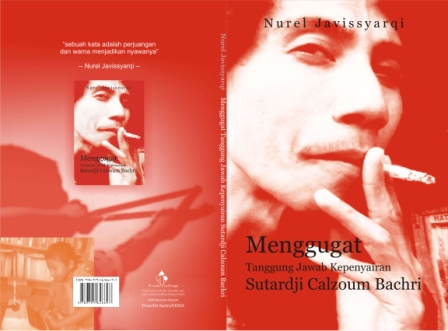
By Mahmud Ali Jauhari
Translated by Agus B. Harianto
What is in your mind when you read the title above? Is it pattern of language? Shaman who is reciting a mantra? A man who was fulfilling his responsibilities? Or, what?
That day, in a study room, I listened to a short question, “What is language?” Perhaps you’ve heard it either. Or, maybe not. Regarding to the question, many people answer it with a simple sentence, “Language is a communication tool.” The question now, is it true that language is a communication tool?
Jumat, 30 September 2011
Anton Bruckner (1824 -1896)
Written by Nurel Javissyarqi
Translated by Agus B. Harianto
http://pustakapujangga.com/2010/07/anton-bruckner-1824-1896/
Anton Bruckner (September 4, 1824 – October 11, 1896) is Austrian composer known for his symphonies, masses, and the motet. His symphonies considered as the final phase marker of Austro-German Romanticism. Because of his harmonies are rich, and polyphonies are long and complex. His music composition helps to define contemporary musical radicalism that took dissonant, modulation without preparation, and complicated harmony as well. His symphonies received criticism over its length, so many repetitions, frequently revised, and the doubt about what version could be more prior. (http://id.wikipedia.org/wiki/Anton_Bruckner)
Jumat, 23 September 2011
Sue Responsibility of Authorship of Sutardji Calzoum Bachri (V)
Written by Nurel Javissyarqi
Translated by Agus B. Harianto
V
There are several Java’s mantra adopted from the doctrine values of Islam, if one of which is far from it should be, it will contaminate spiritual of its depths, such as the spell kulhu sunsang, taken from surah Al-Ikhlas, but distorted till turned a summersault aimlessly.
The mantras which have low-power spiritual and its aura seen red, are easy to learn because it serves to jinn or be united in one with jinn; the patterns of deviation from the true teaching that is deliberately dismantled for the sake of particular fame. It is usually worn by shamans who are not responsible.
Translated by Agus B. Harianto
V
There are several Java’s mantra adopted from the doctrine values of Islam, if one of which is far from it should be, it will contaminate spiritual of its depths, such as the spell kulhu sunsang, taken from surah Al-Ikhlas, but distorted till turned a summersault aimlessly.
The mantras which have low-power spiritual and its aura seen red, are easy to learn because it serves to jinn or be united in one with jinn; the patterns of deviation from the true teaching that is deliberately dismantled for the sake of particular fame. It is usually worn by shamans who are not responsible.
Rabu, 21 September 2011
Reviewing the Authorship of Sutardji Calzoum Bachri (SCB) from Nurel’s Book: “MENGGUGAT TANGGUNGJAWAB KEPENYAIRAN”
(Sue Responsibility of Authorship of Sutardji Calzoum Bachri)*
Written by Aguk Irawan MN**
Translated by Agus B. Harianto
Penyair-penyair itu diikuti orang-orang yang sesat. Tidakkah kau lihat mereka menenggelamkan diri dalam sembarang lembah khayalan dan kata. Dan mereka sering mengujarkan apa yang tak mereka kerjakan. Kecuali mereka yang beriman, beramal baik, banyak mengingat dan menyebut Allah dan melakukan pembelaan ketika didzalimi. (QS As-Syu’ara, 224-227)
Written by Aguk Irawan MN**
Translated by Agus B. Harianto
Penyair-penyair itu diikuti orang-orang yang sesat. Tidakkah kau lihat mereka menenggelamkan diri dalam sembarang lembah khayalan dan kata. Dan mereka sering mengujarkan apa yang tak mereka kerjakan. Kecuali mereka yang beriman, beramal baik, banyak mengingat dan menyebut Allah dan melakukan pembelaan ketika didzalimi. (QS As-Syu’ara, 224-227)
Jumat, 16 September 2011
Sue Responsibility of Authorship of Sutardji Calzoum Bachri (IV)
Written by Nurel Javissyarqi
Translated by Agus B. Harianto
“Buku ini ditulis (keterangan sebelumnya; ada membicarakan sifat-sifat manusia Indonesia, dalam cara seperti dikemukakan oleh Saudara Mochtar Lubis. Dicetak tahun 1920, Haarlem, pengarangnya Prof. J.C. van Eerde, guru besar Universitas Amsterdam dan Direktur dari Koloniaal Institute te Amsterdam. Judulnya: Inleiding tot de Volkenkude van Nederlandsch Indie) dalam tahun 1920, dan dalam tahun-tahun 20-an itu timbul Renaissance Indonesia dengan gerakan Pemuda Indonesia, dan lahirnya Sumpah Pemuda, dan perangsang lagu kebangsaan Indonesia Raya.
Translated by Agus B. Harianto
IV
From quotation of Dr. Abu Hanifah’s writing, Menyambut Ceramah Mochtar Lubis, Renungan Tentang “Manusia Indonesia Masa Kini” at part Lahirlah Sumpah Pemuda:“Buku ini ditulis (keterangan sebelumnya; ada membicarakan sifat-sifat manusia Indonesia, dalam cara seperti dikemukakan oleh Saudara Mochtar Lubis. Dicetak tahun 1920, Haarlem, pengarangnya Prof. J.C. van Eerde, guru besar Universitas Amsterdam dan Direktur dari Koloniaal Institute te Amsterdam. Judulnya: Inleiding tot de Volkenkude van Nederlandsch Indie) dalam tahun 1920, dan dalam tahun-tahun 20-an itu timbul Renaissance Indonesia dengan gerakan Pemuda Indonesia, dan lahirnya Sumpah Pemuda, dan perangsang lagu kebangsaan Indonesia Raya.
Minggu, 11 September 2011
Sue Responsibility of Authorship of Sutardji Calzoum Bachri (III)
Written by Nurel Javissyarqi
Translated by Agus B. Harianto
III
The name of Sutardji Calzoum Bachri is familiar in Indonesian literature for his Poetry Credo. Below I quote some part of it:
“Kata-kata harus bebas dari penjajahan pengertian, dari beban idea. Kata-kata harus bebas menentukan dirinya sendiri.
“The words must be free from colonialism of understanding, from the burden of ideas. The words should be free to decide themselves.”
Translated by Agus B. Harianto
III
The name of Sutardji Calzoum Bachri is familiar in Indonesian literature for his Poetry Credo. Below I quote some part of it:
“Kata-kata harus bebas dari penjajahan pengertian, dari beban idea. Kata-kata harus bebas menentukan dirinya sendiri.
“The words must be free from colonialism of understanding, from the burden of ideas. The words should be free to decide themselves.”
Minggu, 28 Agustus 2011
Sue Responsibility of Authorship of Sutardji Calzoum Bachri (II)
Written by Nurel Javissyarqi
Translated by Agus B. Harianto
Translated by Agus B. Harianto
II
Before I wrote a little further, allowed me to confide about what I felt for this moment. Actually I’m not old enough and science to interpret it. But to answer the Tardji’s essay and the interpreting of the poets I’ve ever read about Asy Syu’ara, I felt like there was a wind blow forced me to write on. Certainly, it will not hamper re-determination in the future, for the sake of sharpening the meaning of life experiences, so sure of, and that’s the prologue of the wanderer.Selasa, 23 Agustus 2011
Sue Responsibility of Authorship of Sutardji Calzoum Bachri (I)
Written by Nurel Javissyarqi
Translated by Agus B. Harianto
I
This paper is a response to the essay of Sutardji Calzoum Bachri entitled Sajak dan Pertanggungjawaban Penyair; his cultural oration at the Pekan Presiden Penyair, published by Republika, September, 9, 2007. In the writing, Tardji stated that text of Sumpah Pemuda is poetry, which is based on the schools of Ibn Arabi, kun fayakun, then he developed the following phrases:
Kamis, 18 Agustus 2011
Sue Responsibility of Authorship of Sutardji Calzoum Bachri
Written by Nurel Javissyarqi
Translated by Agus B. Harianto
Acknowledgement (historical story)
As usual, I search the data from the mass media on Google for myself to be uploaded onto the website http://sastra-indonesia.com/ on which has been running since July 2008. I was ready to take serious risk to make the site from transportation fee of the literary event in Jakarta. After from the capital city, I felt as if I had become a poet, moreover I read a poem on same stage with the masters of literature, on the eve of the inaugural of Guru Besar (Professor) Abdul Hadi W.M., on the campus of Paramadina.
Translated by Agus B. Harianto
Acknowledgement (historical story)
As usual, I search the data from the mass media on Google for myself to be uploaded onto the website http://sastra-indonesia.com/ on which has been running since July 2008. I was ready to take serious risk to make the site from transportation fee of the literary event in Jakarta. After from the capital city, I felt as if I had become a poet, moreover I read a poem on same stage with the masters of literature, on the eve of the inaugural of Guru Besar (Professor) Abdul Hadi W.M., on the campus of Paramadina.
Langganan:
Postingan (Atom)